
Maricopa is on the brink of a future in which you can build a nice private space for grandma, maybe in your backyard or attached to your house. That’s thanks to a new Arizona law going into effect Sept. 13.
State lawmakers and Gov. Katie Hobbs in June gave cities with populations of 75,000 or more the go-ahead to allow in-law dwelling spaces to be built separately or attached to single-family homes. The most recent mid-census estimate puts 75,078 people in the city.
The 75,000-population threshold won’t apply to Maricopa until the next official U.S. Census in 2030.
“That leaves the question of whether some of the restrictions on casitas are going to apply right now,” Mayor Nancy Smith said.
Commonly called “casitas” in Arizona, they are known as “accessory dwelling units” in planning and zoning parlance. Already, some Maricopa homeowners associations have restrictions on casitas, or ban them altogether because lots are too small for attached or unattached ADUs.
“The Glennwilde community is a single-family community,” said Glennwilde Community Manager Diane Zavala. “Therefore, no more than one family can reside under the same address.”
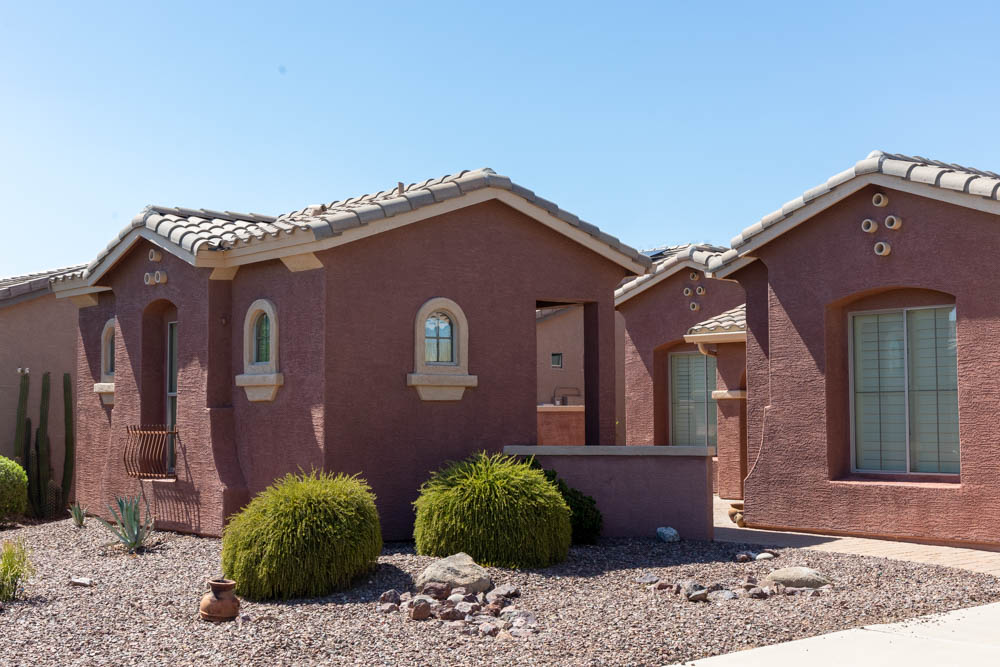
But others like the 55-and-older retirement community of Province allow unattached or attached casitas for homes on larger lots. Province has tiny units without kitchen facilities.
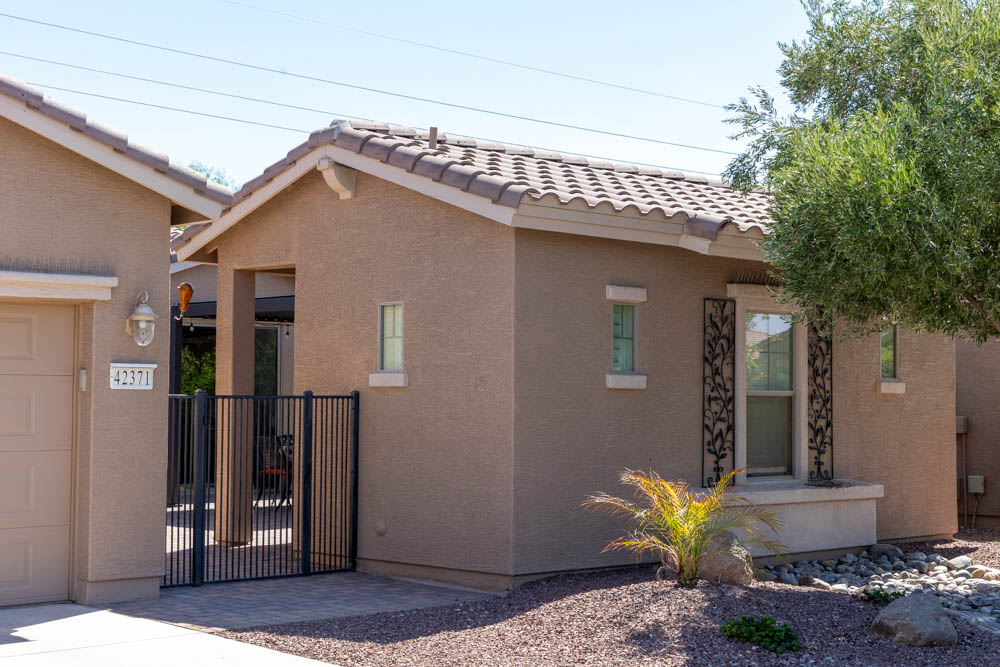
When casitas become commercially viable in Maricopa, there will be a debate whether HOA deed restrictions apply to the need for additional parking when there is a secondary living space for family, or to rent out.
Casitas are an untapped housing market in Maricopa where no one company specializes in such alternative dwellings.
Maricopa home designer Robert Klob said he has designed several accessory dwelling units and guest houses. He has built one in Tortosa and said he has three others in the design phases.
“They are really hot right now in Phoenix,” Klob said. “That said, I don’t think the laws in Maricopa have changed 100% yet to allow cooking facilities, but once the census shows we are over 75,000 it will follow the new state law. Pinal County is also in the process of rewriting their guest house laws.”
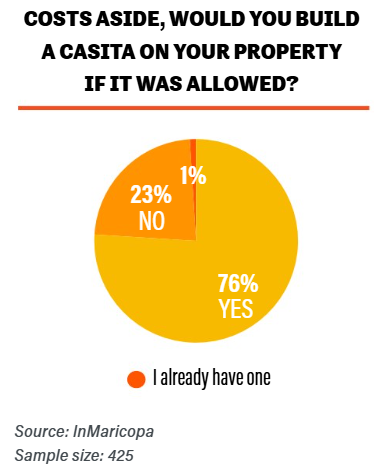
Klob, a Glennwilde resident, was one of 425 respondents to a July InMaricopa poll asking readers, “Costs aside, would you build a casita on your property if it was allowed?”
Seventy-six percent voted in favor of building casitas on their Maricopa properties.
The new ordinance has at least one Phoenix company’s executives looking south to the booming housing market in Maricopa.
Mike Gee, chief executive officer with Maricopa Design, said his company recently merged with Maricopa Casitas, also based there and with the intent of upping its game when it comes to ADUs.
The company is already working on a bid to build such a unit in Maricopa, Gee said.
“Maricopa is talked about in the construction business as being the up-and-coming community,” Gee said. “It’s not too far from Phoenix with that small-town feel that you don’t get in Phoenix. People are now talking about living out the rest of their lives there. And there is not a lot of competition down there. Most of it is in the Phoenix metro area.”
Gee said the new casita law allows contractors to build not one but two alternate dwellings on properties with enough land. The law also offers the ability to increase the size of an ADU based proportionate to the main home. In other words, the larger the home, the larger the casita.
Gee’s partner in Maricopa Casitas, Jim Mullinnex, said most demand for casitas in Arizona is for 500 square feet with a bedroom and bathroom. Some are designed with kitchenettes, Mullinnex said.