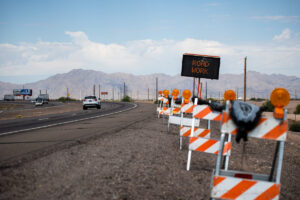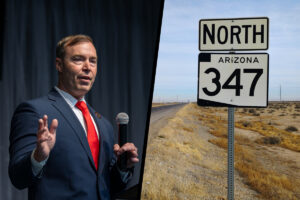

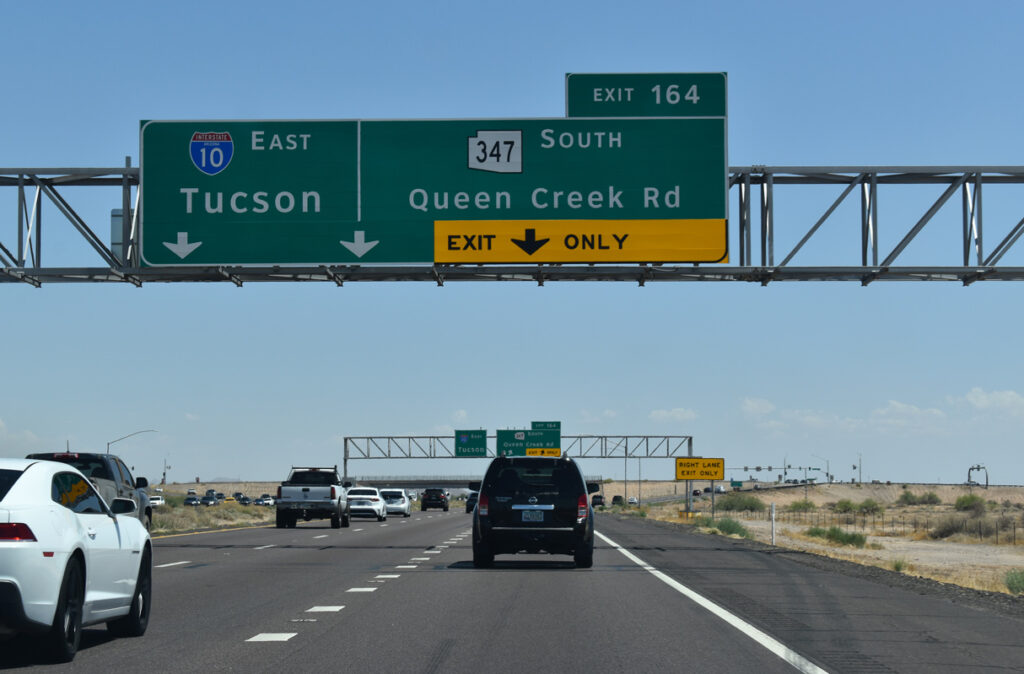
The Arizona Department of Transportation last night held a public meeting to lay out plans for the Interstate 10 and Koli Road Traffic Interchange Study, meant in part to alleviate bottlenecking at the top of State Route 347, and glean feedback from community stakeholders.
The proposed interchange — previously called the Germann Road Traffic Interchange— would be part of the Wild Horse Pass Corridor Projects and add a new interstate exit between the Wild Horse Pass Boulevard and State Route 347/Queen Creek Road exits.
Wild Horse Pass Boulevard has long been a bypass for Maricopa commuters coming home from the Valley to reach SR 347 via Maricopa Road.
“The Gila River Indian Community is experiencing significant growth,” Carmelo Acevedo, ADOT project manager for major projects and alternative delivery, said last night. “Currently, access to and from the interstate is limited leading to inefficient and indirect traffic routes. This project aims to improve these connections, thereby supporting and fostering planned regional growth.”
“In response, the community is planning a significant expansion of the local roadway network, including the extensions of Koli Road and the proposed traffic interchange,” Acevedo said.
ADOT leaders presented three alternatives to the proposal during the meeting:
A no-build option would focus on maintaining the existing corridor infrastructure — the maintenance would occur over the next two decades — with no new access from I-10 and no connection built between Koli Road and I-10.
A diamond interchange would create a new arterial connection with four ramps connecting Koli Road to I-10 and a 122-foot-wide bridge that spans the interstate.
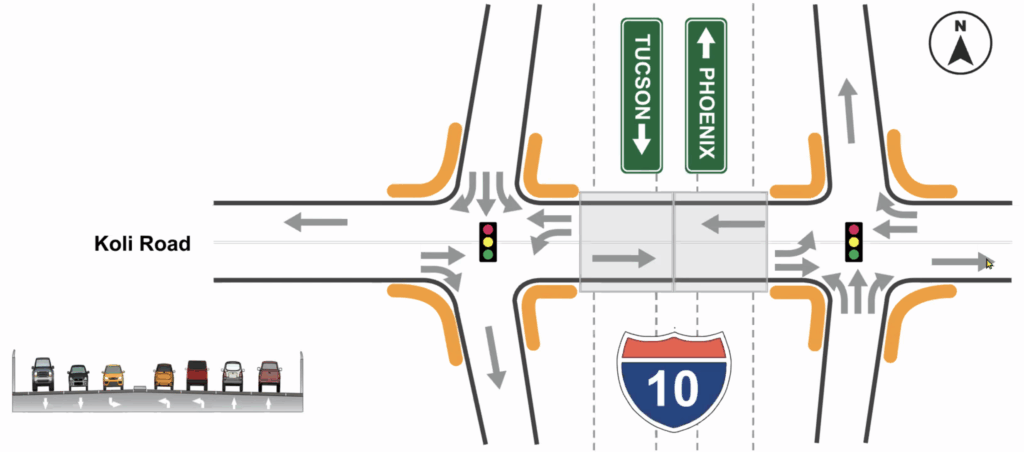
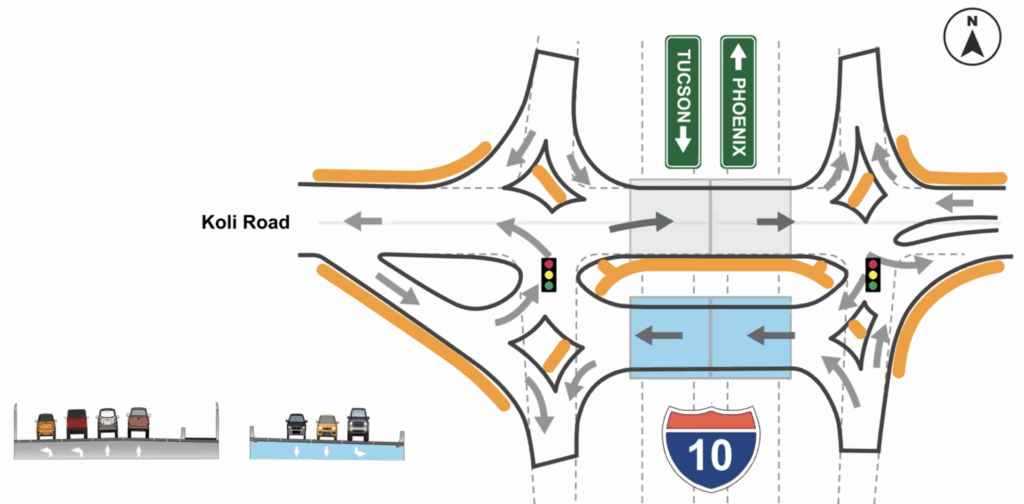
“Pedestrians, bicyclists and motorcyclists are more familiar with diamond interchange than the … diverging diamond interchange,” Acevedo said. “Arizona currently has over 400 diamond interchanges in operation, compared to just four full DDIs and two half DDIs; 400 versus six.”
One DDI you might know is the one at Interstate 17 and Happy Valley Road in north Phoenix.
There were 15 environmental impact criteria considered for the alternatives like water resources, noise, air quality, optics, land use, local businesses, residential communities and farmland. It was found that, obviously, the no-build option would have the least environmental impact and that both build alternatives would have near identical environmental impacts.
The diamond interchange would require 34 acres of land acquisition and the DDI would require 36 acres. Nine-tenths would come from tribal land and the rest from allotted parcels.
“The diamond interchange provides the highest rating in the criteria assessed and meets the purpose and need,” Acevedo said. “The DDI offers improvement and meets the purpose and needs, but has significant impacts and costs, namely in the right-of-way as well as construction costs. Based on our analysis, the diamond interchange has the least amount of impact.”
Local roadway extensions connecting to I-10 would be fully funded by GRIC, he noted.
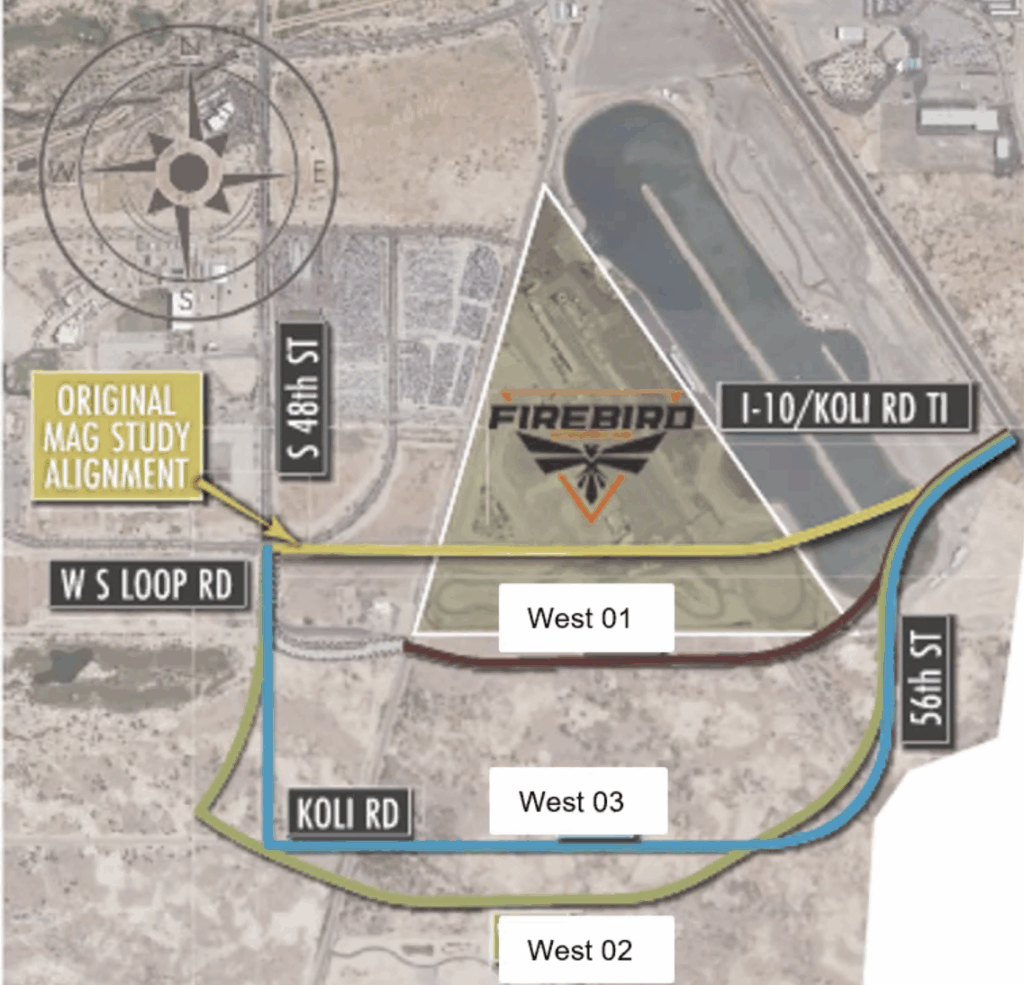
The next steps after the public scoping stage are to draft an Environmental Assessment and initial Design Concept Report in the spring. The findings of those will be presented at a public hearing next summer and one of the three alternatives is expected to be selected in a year’s time.
Members of the public made no comments at the meeting but asked questions like what services the interchange would provide that existing ones don’t already, if interchange construction would be coincident with widening and whether viability of the Firebird Motorsports Park would come into question.
Acevedo said the proposal would benefit the local road systems, keep pace with growth and provide access to popular locations. He said widening I-10 there would not impact construction of the interstate exit.
The attendee who asked about the racetrack was directed to Wild Horse Pass Gila River Development.
If you were unable to attend the meeting but would like to provide comment on the study, you can do so by email at [email protected], by phone at 855-712-8530 and through the mail to the I-10/Koli Road Traffic Interchange Study Office, 6515 S. Rural Road, Suite 107 in Tempe.
ADOT will accept comments until Nov.8, when they will be analyzed, answered and logged as part of the environmental impact study.