

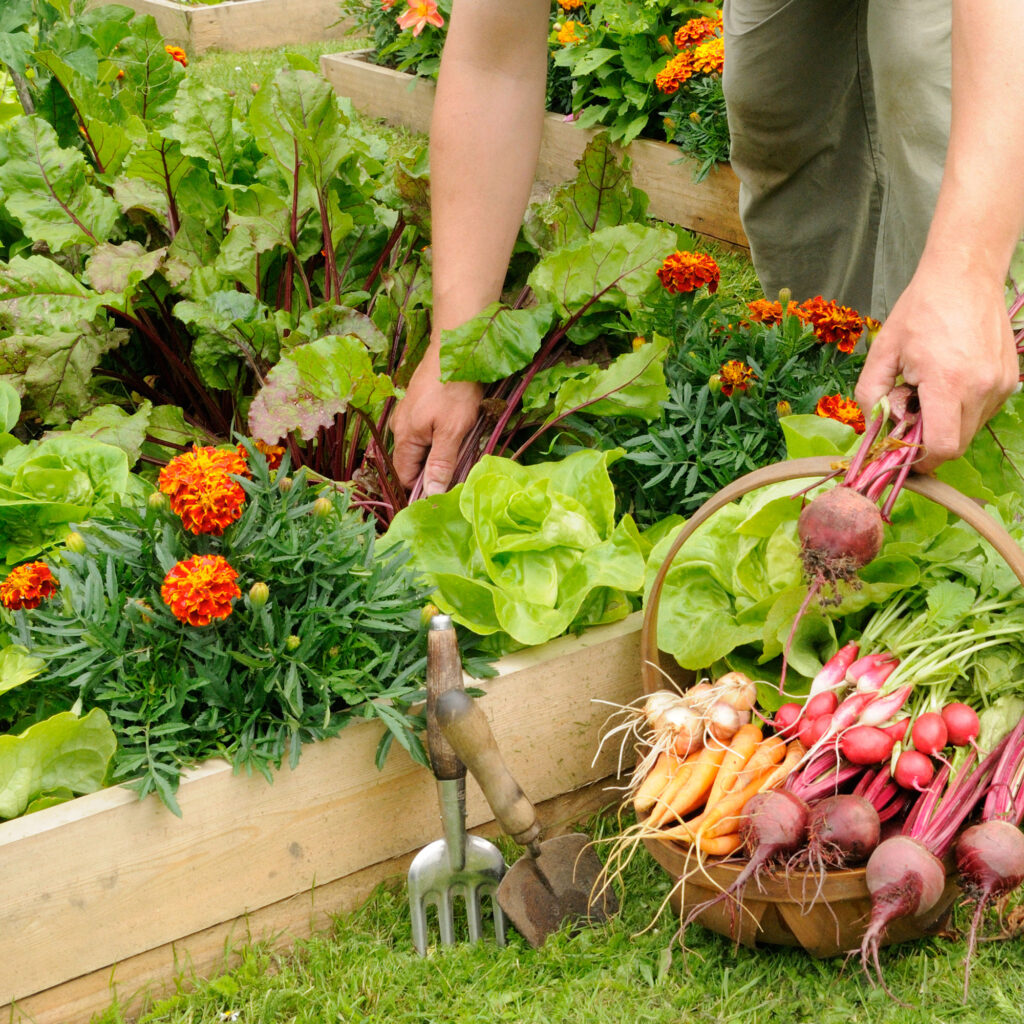
Pumpkins in other parts of the country may be frost laden, but desert gardeners are gearing up for their favorite planting time. The autumn vegetable garden can include beets, broccoli, cabbage, carrots, cauliflower, celery, chard, green beans, kale, kohlrabi, all kinds of lettuce, leeks, onions, peas, radishes, spinach and turnips. Green beans add nitrogen back into the soil, and they’re delicious. Wouldn’t you be proud to serve the infamous green bean casserole on Thanksgiving with veggies from your own garden? Even cucumbers, zucchini and tomatoes can be produced, but for a shorter season.
When planning your vegetable garden, select a good location. Most vegetables need 6-8 hours of direct sun daily. While it’s easy to add shade cloth for relief from summer sun, it’s impossible to create sun in an area that gets too much shade in the winter. Observe your yard and think about which areas get sun and shade during the day. There are helpful websites to track sun and shade in your yard.
Container gardening is always a great option and can be moved as the weather dictates. When it’s hot, place the containers where they will get afternoon shade. When it cools down, move them to full sun. If frost is predicted, they can be easily covered with blankets or frost cloth. Larger pots are preferable because they give plants room to grow, and the additional soil protects the roots from temperature fluctuations. Just about any container can be used, even a plastic bucket, but be sure to drill holes in the bottom for drainage. Raised beds are easy to plant, especially if you have difficulty getting down on the ground. Readymade raised beds are available and are easy to weed and harvest.
Our native desert soil lacks the organic matter and nutrients needed for successful vegetables. The addition of compost and manure will provide much needed amendments. You can prepare your own soil with a mixture of garden soil, potting mix, sand and perlite or vermiculite. Commercially bagged soil is another easy option.
Most vegetables are started from seeds or transplants. Harvest can be obtained sooner with transplants; however, it is more expensive and certain plants do not transplant well. Beans, beets, carrots, celery, chard, cucumbers, kale, kohlrabi, lettuce, onions, peas, radishes, spinach, squash and turnips can be started in the garden from seeds. Vegetables like broccoli, cabbage, cauliflower, peppers and tomatoes are generally more successful with transplants.
Proper watering is essential in any Arizona garden whether you include it on your irrigation system or hand water. Vegetables also need a well-balanced fertilizer along with adequate water to produce.
Growing an autumn vegetable garden is lots of fun, and when your friends and relatives are shoveling snow you can share photos of your healthy harvest.
Wende Gehrt is a Pinal County Master Gardener.

![Maricopa Police Chief Mark Goodman speaks to Maricopa City Council while presenting his department's annual report on April 7, 2026. [Monica D. Spencer]](https://inmaricopa.com/wp-content/uploads/2026/05/GOV-Crime-Stats-by-Monica-D-Spencer-300x200.jpg)





![A photo of a custom-made Glacier Springs Water system, layered over a photo of person washing a cup in a sink. [Glacier Springs Water, Cotton Bro Studio]](https://inmaricopa.com/wp-content/uploads/2026/06/20260611-glacier-springs-water-300x169.jpg)
![William Senne, arrested June 2, 2026. [Pinal County Sheriff's Office]](https://inmaricopa.com/wp-content/uploads/2026/06/20260610-william-senne-arrest-300x170.jpg)
![Maricopa Police Chief Mark Goodman speaks to Maricopa City Council while presenting his department's annual report on April 7, 2026. [Monica D. Spencer]](https://inmaricopa.com/wp-content/uploads/2026/05/GOV-Crime-Stats-by-Monica-D-Spencer-150x150.jpg)