

The numbers don’t lie: the coronavirus has ravaged the national economy since March.
- Across the country, nearly 100,000 small businesses closed, nearly 60% of them permanently, through the end of August.
- More than 32,000 restaurants closed, about 61% of them never to open again.
- A U.S. unemployment rate of 7.9% and nearly 900,000 new unemployment claims reported by the states in September 2020.
- In Arizona, 90,000 fewer residents were employed in September compared to a year ago, with about 58% of those jobs lost in the Phoenix region.
As grim a picture painted by those statistics, local businesses are surviving – and in some cases, thriving in – the pandemic. Certainly, many Maricopa businesses have felt pain and many local workers have lost their jobs for weeks or months, and perhaps permanently.
But eight months in, the greatest public health crisis in a century has been less doom than boom, doing relatively little to slow the Maricopa economy.
In fact, the future of the city, by many indicators, is rosy.
RELATED STORIES:
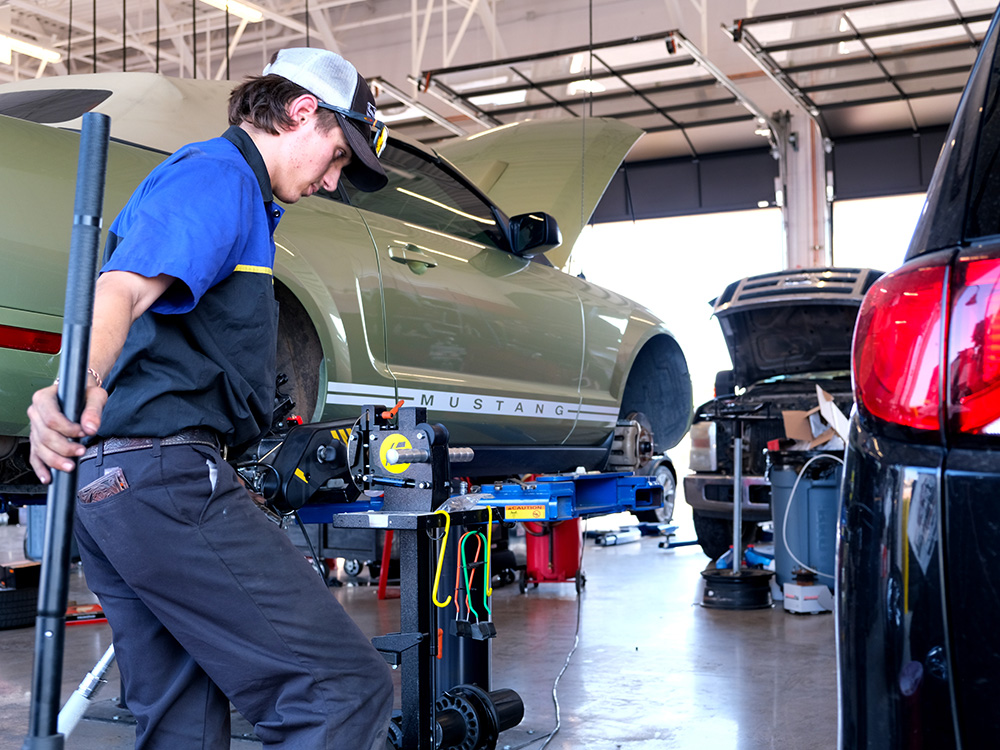
At Iconic Tire, business anything but flat
Bahama Buck’s owners excited to bring Sno to Maricopa
‘WELL POSITIONED TO SURVIVE’
“I was on pins and needles in April and May, wondering how many businesses we were going to lose,” Mayor Christian Price said of the pandemic’s effect. “It puts people on edge.”
The governor’s stay-at-home order closed all but essential businesses. Most other businesses started to open in mid-May, though a few businesses – including gyms – had to wait longer to reopen and were then closed again.
But it could have been far worse, Price acknowledged.

Some essential businesses – the supermarkets and Walmart, for example – thrived from the beginning, with certain household goods flying off the shelves for months.
Many others, including restaurants, were forced to close and then, weeks later, change gears to do business within mitigation guidelines. Some received government loans to buy time until they could reopen.
“We were well-positioned to survive the pandemic, without a heavy reliance on sit-down restaurants,” Price said, adding the type of restaurants in town made it easier for a pivot to takeout and curbside delivery.
At Native Grill and Wings, which was shut down for eight weeks, owner Pat Kieny said he and his team reopened with a robust plan to convert from full-service to takeout. Others did as well.
“Native was well-prepared to make that transition,” said Kieny, noting the restaurant had a lot of experience handling food orders-to-go for big events like the Super Bowl and high school graduations. “We were aggressive with our ‘Buy 10 wings, Get 10 Free’ promotion to keep customers engaged.”

Other businesses didn’t fare so well.
Aaron’s rent-to-own in Edison Place was perhaps the highest-profile business to close – in July. The company said earnings eroded earlier this year, primarily due to the pandemic.
Hospitality- and entertainment-focused entities like Harrah’s Hotel and Casino and the movie theater at Ak-Chin Circle suffered, too.
As did the gyms.
But there were many bright spots, too.
Sunrise Café, which closed during the pandemic, was purchased and reopened by new owners, and Crossfit Maricopa found a new owner.
A number of businesses launched during the pandemic, including AAMCO, Iconic Tire and Rili B’s Taco Shop. Iconic was so busy when it opened in August, it started looking to hire more automotive technicians. Next door, the cars were lined up around the building when Rili B’s opened in September.
Development – current and future – is moving ahead.
Construction of the city’s first hotel, LaQuinta, hums along adjacent to Copper Sky. Other structures continue to rise, including John Wayne Parkway Self Storage, Maricopa Animal Hospital, the Pinal County Complex, and the city’s new library. And the city will soon have its first bicycle shop.

The couple working to open Bahama Buck’s closed on the purchase of its new site at The Wells retail center in March, and then watched as the pandemic slowed construction of their shop. But they are on track for a November opening.
Like much of the rest of the nation, the real estate market is red-hot, with average home prices up 15% over a year ago.
Residential development is surging, with 229 new-home permits awarded in September, the highest monthly total in more than a decade. Homes are rising at Oasis at The Wells, a multifamily development of apartment homes, and in several existing communities.
There are major residential projects on the board. In October, El Dorado Holdings received site approval for REV@Porter, a gated rental community. Maricopa Stonegate, a “village” of homes, shops and restaurants, earned approval from the city Planning & Zoning Commission in August.
Meanwhile, some big commercial developments were getting ready to break ground, including the Sonoran Creek Marketplace, which signed Sprouts Farmers Market as a tenant, Estrella Gin Business Park, the city’s first office complex, and a 20,752-square-foot emergency medical center.

A SUMMER COMEBACK
At Native, the January-to-May period – with New Year’s, March Madness, school celebrations and hungry Snowbirds – is typically the busiest part of the year, Kieny said.
Closing the doors for two months meant the business was “way down” for that period year over year, he said. In mid-May, the restaurant began to claw back and was eventually able to welcome diners back indoors at 50% percent capacity, a restriction in place for the foreseeable future.
Things improved, and despite the limit on the number of diners, Native’s business in July and August surged, outpacing revenues for the same period last year.
Kieny figures the pandemic kept a lot of Maricopa families at home this summer. Instead of vacationing in San Diego or Disneyland – all of California shuttered – they remained in the city. They bought lots of wings and pizza.
“It was really nice that the people in Maricopa supported us over the summer,” he said. “It turned out about as well as it could have, given the situation.”
The reduced capacity does hurt, especially during football season, with tables not turning over as quickly as patrons eat and watch the games, Kieny said. He acknowledged that face masks and physical distancing will be around for a while.
“It’s a little bit troublesome trying to plan,” he said. “Will it be a couple months or a couple years?”
Meanwhile, Kieny has another move in store.
With outdoor dining possible year-round, Kieny said he is looking at expanding the open-air patio to accommodate more diners.
‘THEY STEPPED UP HUGE’
“It hurts, but we didn’t get clobbered,” said Price, noting that other cities, like Scottsdale for instance, with its huge hospitality industry, felt far greater economic pain.
He said the pandemic reminded him of the housing recession in the late 2000s. The downturn was difficult to predict, but when it hit, you just “work through it.”
“We were nothing but houses,” he recalled. “We just got annihilated. Yet we made it through it.”
With the pandemic, most small businesses in town were helped by residents who rallied around them, “shop local” becoming a popular mantra in local Facebook groups.
“I think they stepped up huge,” Price said of Maricopans. “I hope we always give the local fare the first shot. It’s so, so important.”
The mayor said he sees the trend continuing, pointing out an effort to encourage residents to buy their holiday presents – gift certificates, massages and the like – from local businesses.
“I think that is phenomenal,” he said. “It is the epitome of the ‘shop local’ campaign.”
The city’s support of local merchants helped the city, too.
In September, most major sales tax categories showed increases. Restaurants were up 38%. Retail was up 30%. Utilities increased 15%. Construction contracting was up 12%. Grocery stores up 4%.

‘WE FEEL THE EXCITEMENT’
For Collins and Adelaide Appiah, it couldn’t have come at a worse time.
In 2018, they purchased a Bahama Buck’s franchise. As the virus took hold, they were preparing to build a 2,000-square-foot building with indoor seating and drive-thru to sell frozen treats.
“It was a little scary when the pandemic hit,” Collins said, in mid-October, about three weeks before their scheduled opening.
Contractor costs went up considerably as a result, said Adelaide, an engineer, but their bank’s cooperation helped them stay the course.
And the city’s assistance during the process made it very smooth, she added.
“You get a sense the city really wants businesses to open here,” added Collins. “Always a quick response and they are great to work with.”
The Appiahs have provided regular construction updates – including delays – on their Facebook page. They are excited to see the community’s enthusiasm for Bahama Buck’s.
“We feel quite comfortable” opening with the state of things right now, said Collins, a medical doctor. “We feel the excitement.”
Raquel Hendrickson contributed to this report.
This story appears in the November issue of InMaricopa magazine.