

As Maricopa’s population continues to grow, so do the caseloads for its courts. Judges are tasked not only with balancing accessibility, efficiency and fairness but also with making the court system easier for the public to navigate.
Three courts serve Maricopa and surrounding communities: Maricopa Municipal Court, Western Pinal Justice Court and Pinal County Superior Court. Each handles distinct types of cases. InMaricopa spoke with judges to gain insight into their roles, challenges and common misconceptions.
Editor’s note: Some quotes have been lightly edited for readability.
Maricopa Municipal Court

Stephen McCarville brings decades of experience to Maricopa Municipal Court, including over 20 years on the Pinal County Superior Court, six as presiding judge.
In January 2023, the Maricopa City Council appointed him interim presiding judge for the municipal court. He describes his role as overseeing court operations and ensuring fair, efficient administration of justice within city limits.
What is Maricopa Municipal Court?
The municipal court serves as the city’s limited jurisdiction court, handling cases that occur within city limits. These include misdemeanors, civil traffic citations, DUIs, protective orders and violations of city ordinances. Its mission is to provide accessible, community-centered justice reflecting the values and needs of Maricopa residents.
 What types of cases do you most typically hear?
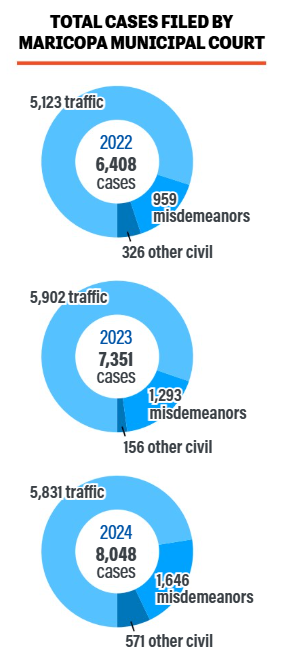
In 2024, the municipal court processed a total of 8,645 case filings. The majority — approximately 64% — were civil traffic violations.
What challenges does the court encounter with a rapidly growing community like Maricopa?
As Maricopa experiences continued population growth, the municipal court faces the significant challenge of maintaining consistent service levels despite a soaring caseload — averaging 865 cases per employee, the highest in Pinal County.
In response, the court remains committed to a people-first approach, emphasizing dignity, respect and accessibility in every interaction. Even under increased operational demands, the court prioritizes ensuring that every visitor is treated as a valued member of the community, reinforcing its dedication to public trust and service excellence.
What are common misunderstandings the public tends to have about the court?
First, that every case goes to trial. In reality, most cases — especially criminal ones — are resolved through plea bargains or settlements, not dramatic courtroom battles.
Second, victims must press charges. Prosecutors can pursue charges even if the victim doesn’t want to, especially in serious cases like domestic violence.
How does your court educate the public?
The court is actively exploring new and meaningful ways to engage with the community and promote public understanding of the justice system. Educational initiatives include hosting interactive mock trials that give participants a hands-on view of courtroom proceedings and conducting Q&A sessions at local schools to foster civic awareness among students.
In addition, the courthouse offers copies of the comic book The Family Circus Visits the Courts by Bil Keane. These are available upon request to help make court concepts more accessible and relatable, especially to younger audiences. These outreach efforts are designed to demystify the legal process, build trust and empower community members with knowledge about their rights and responsibilities.
Western Pinal Justice Court
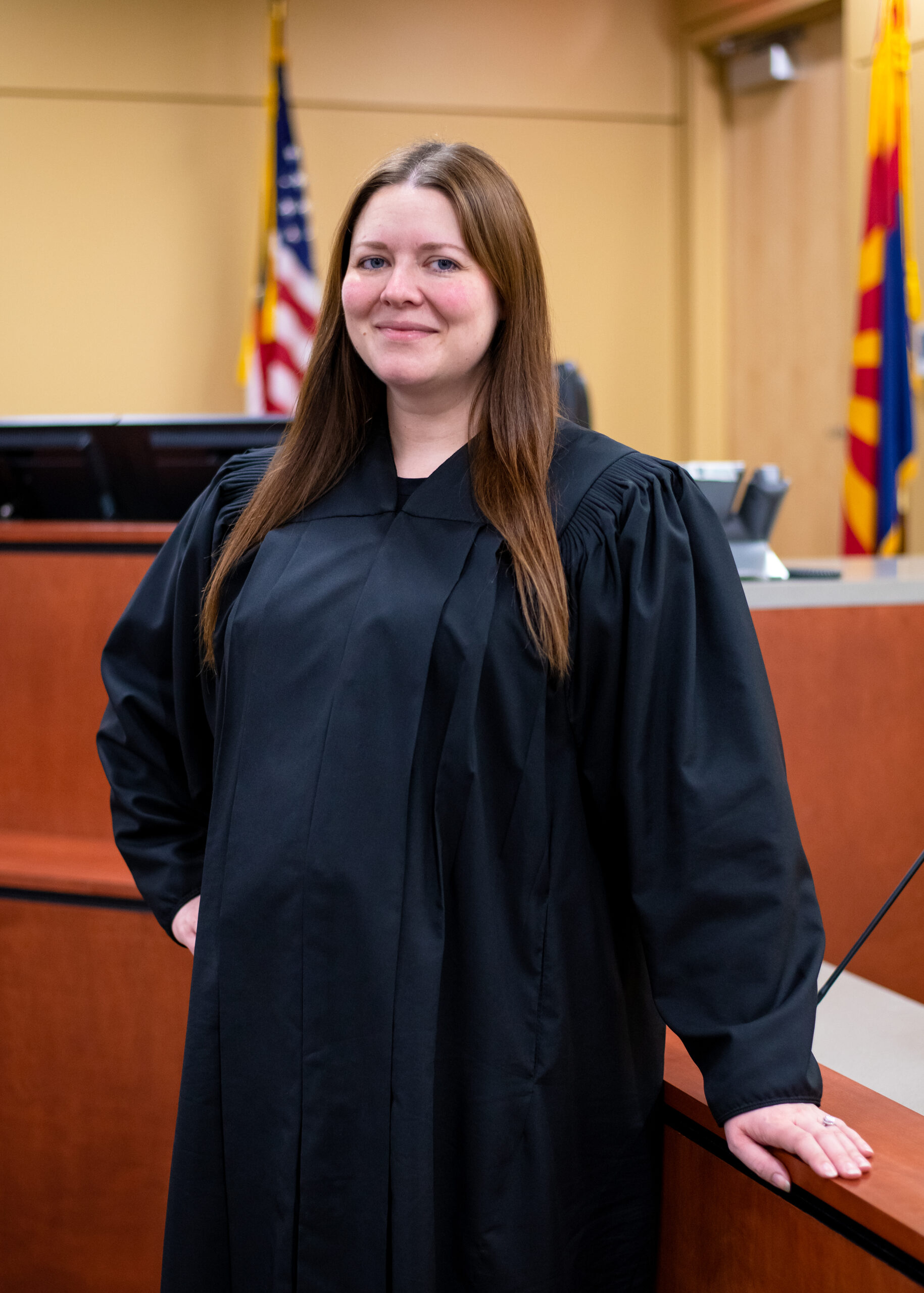
Patricia Glover ran unopposed for the Justice of the Peace seat last year and was appointed nearly three months early by the Pinal County Board of Supervisors. She will serve through 2028. Glover enjoys “explaining the processes and decisions to people,” helping them understand how the law applies to their case.
What is the Western Pinal Justice Court?
This court handles small claims, civil traffic violations, criminal misdemeanors, evictions and orders of protection or injunctions against harassment.
 What types of cases do you most typically hear?
Traffic violations and civil lawsuits under $10,000.
What challenges does the court encounter with a rapidly growing community like Maricopa?
We do not have the court staff to support the filings that we have coming in. For example, the Pioneer Justice Court in San Tan Valley has a very similar number of case filings, but they have twice the number of clerks to handle the incoming filings.
Because the city of Maricopa has grown as quickly as it has, we haven’t been able to get approval for the staffing positions to keep up with that. We do have a solution pending, but we have to go through the proper steps to get it approved.
What are common misunderstandings the public tends to have about the court?
A lot of people come in and they’re confused by the steps they need to take. Since we are a lower jurisdiction court, a lot of times people don’t have representation or attorneys to help them navigate the court system, so they’ll ask questions. The court can answer general questions or give general legal information, but we can’t give legal advice because we’re a neutral third party.
I think people in general struggle with navigating the court system, so we’ve tried to simplify the processes, like providing downloadable forms for free. But they still contain a lot of legal jargon, which can be confusing to someone who’s not used to reading it every day.
How does your court educate the public?
We are currently working on several initiatives to simplify court processes and provide more online options, making it easier for self-represented parties to navigate the system. As chairman of the Forms Committee for the county justice courts, I am developing accessible do-it-yourself packets to guide the public through common procedures.
Additionally, we recently added a new website link where people can access information about civil traffic tickets. Visitors can learn about the process, view their hearing dates and even make payments online — eliminating the need to come to the courthouse in person.
 Pinal County Superior Court

Pinal County Superior Court is the county’s general jurisdiction trial court, handling larger and more serious cases than the municipal or justice courts. Felonies — such as burglary, aggravated assault and drug trafficking — and civil disputes over $10,000 are heard here. The court also handles divorce, child custody, juvenile cases and probate matters, including wills and estates.
The key difference is scope and seriousness: Superior Court addresses major, life-altering legal issues, while municipal and justice courts focus on everyday legal matters with more limited authority.

![Western Pinal Justice of the Peace Patricia Glover speaks during a City of Maricopa Republican Club on May 23, 2026. [Monica D. Spencer]](https://inmaricopa.com/wp-content/uploads/2026/05/20260529-spencer-teeple-republican-club-1-4-300x200.jpg)





![Walmart wants to bring drone delivery services to Maricopa. [Bryan Mordt, Wing]](https://inmaricopa.com/wp-content/uploads/2026/06/20260622-walmart-drones-300x169.jpg)


![Western Pinal Justice of the Peace Patricia Glover speaks during a City of Maricopa Republican Club on May 23, 2026. [Monica D. Spencer]](https://inmaricopa.com/wp-content/uploads/2026/05/20260529-spencer-teeple-republican-club-1-4-150x150.jpg)