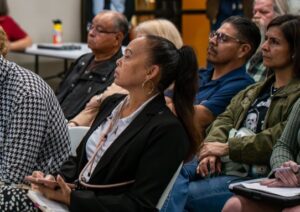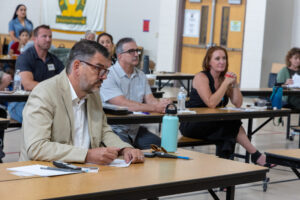


Maricopa Unified School District Governing Board members last night postponed action on setting a Nov. 5 bond election.
The reason: a lack of information and a bond-sale dollar amount to share with district voters.
“We thought we were going to approve the intent [to set an election date], and then have a series of meetings over the next few weeks,” school board President Robert Downey said after the meeting.
He added he thought the board needed more information before calling a bond election.
Downey said he and other board members wanted to better explain to voters where the money will go for district improvements and facilities expansion.
District leaders stressed that should the board set the election later, the bond sale would not affect the tax rate or raise taxes.
School board member Torri Anderson voiced concerns about fire services to an area outside the city limits where a new middle school is slated.
Board member AnnaMarie Knorr, who was recently appointed to the Maricopa City Council, said the developer of the Amarillo Creek subdivision on Papago Road has an agreement with the city to provide fire services.
MUSD Chief Financial Officer Jacob Harmon said once the legislature approves the state budget, the district will have $31 million to build the third middle school in the Hidden Valley community.
The board last night agreed to accept two donations of land totaling 25 acres adjacent to the Amarillo Creek subdivision, the only HOA in unincorporated Maricopa, for future middle and elementary schools.
Harmon said Maricopa’s seventh elementary school was about “two years on the heals” of the third middle school.
In addition, Harmon said, there are facilities yet to be built at Desert Sunrise High School, including another parking lot and new bleachers for athletics facilities.
The district needs to add about 40 classrooms of space to accommodate growth in the elementary schools, he said.
Anderson said she also wanted conversations about Pinal County Sheriff’s Office playing a role in child safety there.
Voter bond approval would allow the school board to sell school improvement bonds, which would be paid back by existing property tax revenues.
Knorr warned against waiting too long to call a bond election, which would limit the district campaign time to sell it to voters.